

 By
By Born in the arid landscapes of western India, the Bandhani saree is a vibrant expression of resilience, artistry, and tradition. From the sun-kissed deserts of Gujarat and Rajasthan to international fashion runways, Bandhani has traveled across centuries, cultures, and continents—without losing its soul.
Ancient Roots in Harsh Lands
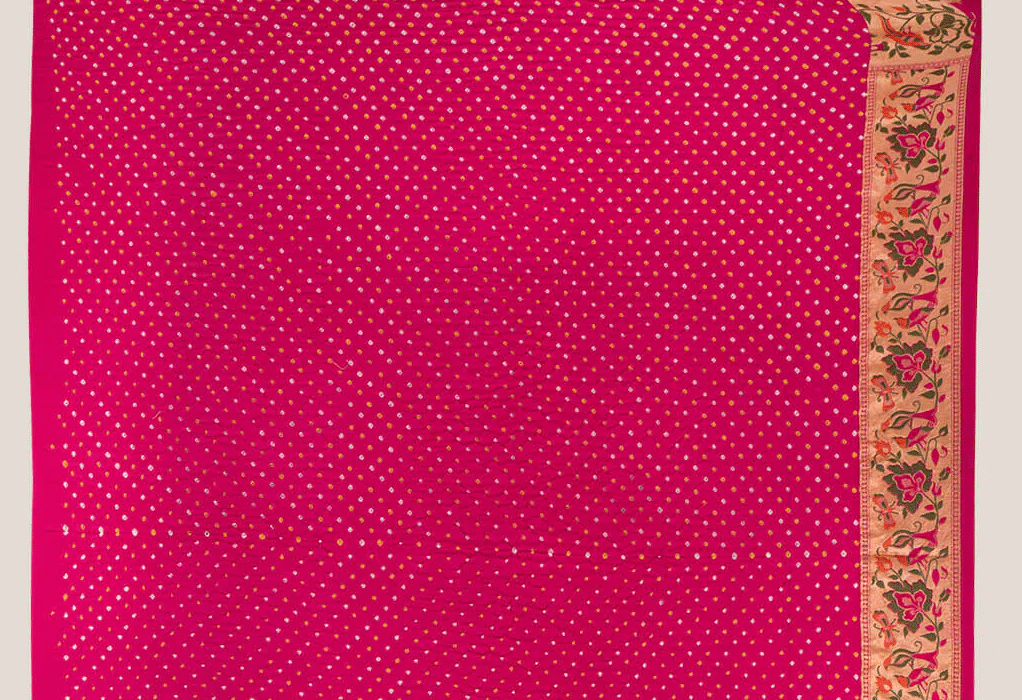
Bandhani, also known as Bandhej, dates back over 5,000 years, making it one of the oldest tie-and-dye traditions in the world. In regions where resources were scarce and climates were harsh, artisans transformed plain fabric into dazzling patterns using nothing but thread, dye, and extraordinary skill. The desert landscapes influenced both the colors and motifs—bright reds, yellows, greens, and blues stood out vividly against sandy backdrops.
Traditionally, Bandhani sarees were worn during weddings, festivals, and religious ceremonies, each color and pattern carrying symbolic meaning. Red represented fertility and prosperity, yellow signified joy and spirituality, while green symbolized new beginnings.
The Art of Tie and Dye
The beauty of a Bandhani saree lies in its painstaking process. The fabric—usually silk, cotton, or georgette—is first washed and marked with intricate designs. Thousands of tiny knots are then hand-tied using fingernails or metal tools, a process that demands precision and patience.
Once tied, the fabric is dyed, often multiple times to achieve layered colors. After drying, the knots are carefully opened, revealing a mesmerizing pattern of dots, waves, and motifs. No two Bandhani sarees are ever identical—each is a unique masterpiece shaped by the artisan’s hands.
Cultural Significance and Regional Styles
Different regions developed their own distinctive Bandhani styles. Gujarati Bandhani is known for detailed dots and symmetrical patterns, while Rajasthani Bandhej often features bold colors and dramatic designs. Patterns like leheriya (wave-like stripes), shikari (hunting scenes), and boondi (fine dots) reflect local traditions and storytelling.
For generations, this craft has been passed down within artisan families, preserving techniques that cannot be replicated by machines.
From Tradition to Trend
In recent decades, Bandhani has made a striking comeback on global fashion platforms. Renowned designers have reimagined Bandhani sarees, blending traditional techniques with contemporary silhouettes. Celebrities, fashion influencers, and luxury labels have embraced its handcrafted charm, showcasing it on international runways and red carpets.
This global recognition has helped revive interest in authentic handloom textiles, positioning Bandhani as a symbol of sustainable and ethical fashion.
A Timeless Legacy
Despite its modern adaptations, the Bandhani saree remains deeply rooted in tradition. It continues to celebrate craftsmanship, community, and cultural identity. From desert villages to fashion capitals, Bandhani’s journey is a reminder that true artistry transcends time and borders.
Wearing a Bandhani saree is not just a fashion choice—it is wearing history, heritage, and the enduring spirit of India.